My own liver patients, written up and published
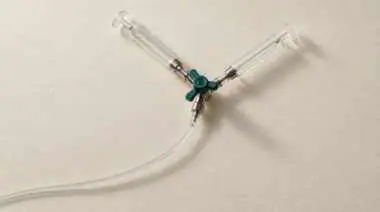
Twenty three people I treated in Beirut, my name first on the paper, including the ones that went badly. It is free to open and free to read.
Often there is, and it is the whole of what I do. I close the one blood vessel that feeds the problem, through a needle at your wrist. Nothing is cut out, and the organ stays where it is.
Which one is yours: fibroids, an enlarged prostate, varicocele, liver tumours, pelvic pain.
If it is not one of mine, I will tell you that too, and where to go.
A question costs you a message. Nothing is decided today.
Who I am
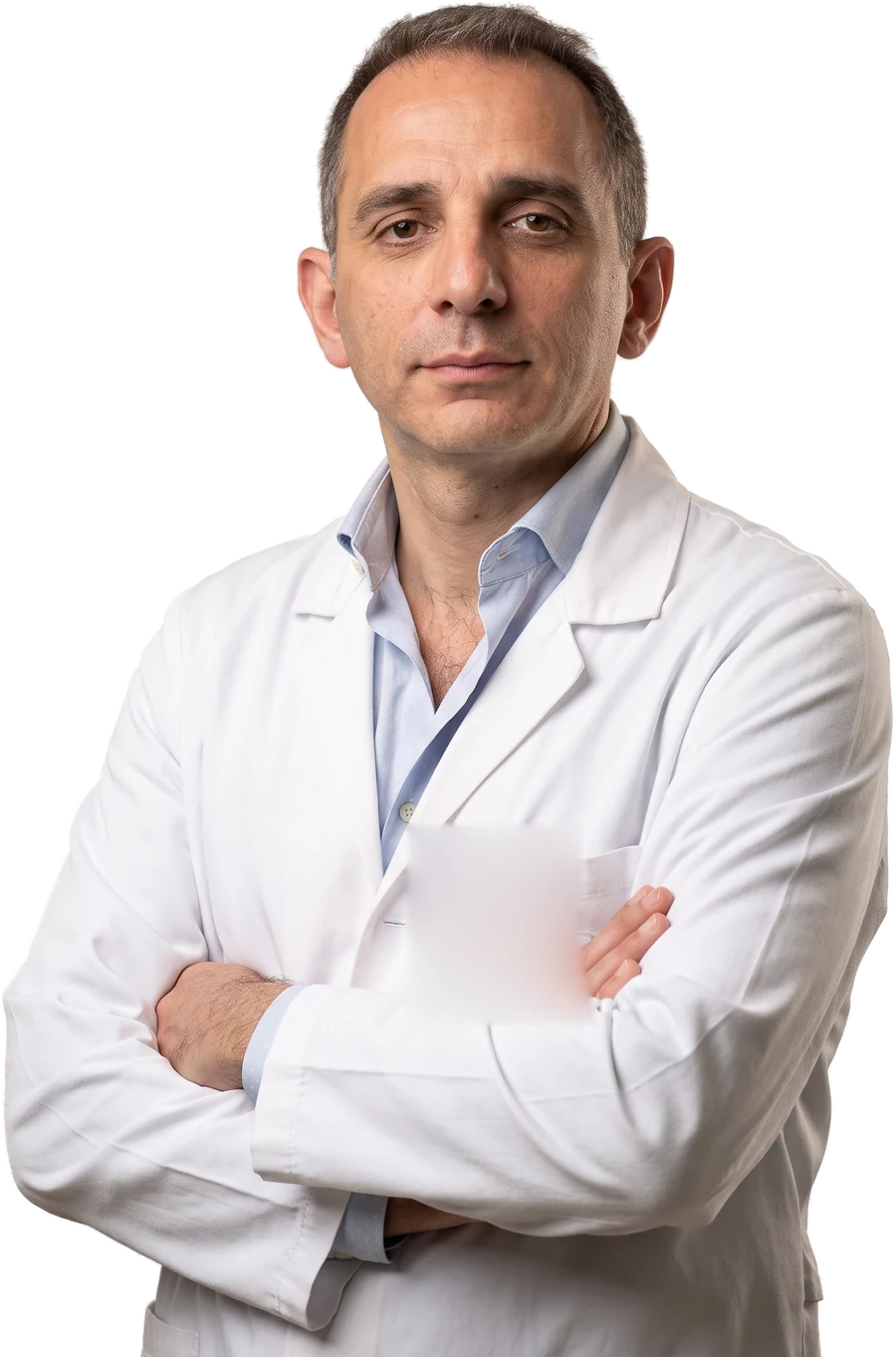
I studied medicine at the American University of Beirut. I trained in radiology at Harlem Hospital in New York and at Allegheny General in Pittsburgh, and then in interventional radiology. I worked in the United States for a while, and then I came home.
Today I practise at Clemenceau Medical Center and at Saint George Hospital University Medical Center, both in Beirut, in the Department of Diagnostic and Interventional Radiology.
In 2023 a medical magazine asked me, on the record, what a newer treatment for an enlarged prostate could and could not do. I answered the second half first.
هذا الخيار لعلاج تضخم البروستات ليس بديلاً عن الجراحة او العلاجات الأخرى المعتمدة
This option for treating an enlarged prostate is not a replacement for surgery, or for the other treatments that are already established.
Arab Hospital Magazine, 19 June 2023
The five
Most people who write to me are dealing with one of these five.
They gave you a date. They told you the fibroid comes out and the uterus goes with it. You have had your children, so nobody expected you to mind.
Asking me costs you a message. You keep your date.
A fibroid is fed by blood, down one road. I go in at the groin, the same way a heart doctor goes in to place a stent, and follow that road to its end. Then I let through grains a little larger than a blood cell, until the road closes. It suffocates, and it shrinks. Written down it is uterine fibroid embolization. Say that to your gynaecologist and you will be understood.
Your uterus stays where it is. So do the small ones, and that matters more than it sounds. Cut out the big fibroid and the small ones grow into its place. Closing the road closes it to all of them, on the same afternoon.
It shrinks. It does not leave. For some women it wakes years later and they come to an operation in the end, and I cannot tell you today which woman you are.
If you were still hoping for a pregnancy I would not start you here. I would send you to a surgeon who takes the fibroid and leaves the uterus, and I would tell you that in the room.
An hour and a half, sometimes two. You stay the night and go home in the morning.
The first day hurts, and I am not going to tell you otherwise. For two or three days most women feel as though they have flu.
Most are back at work inside the week. Bring your ultrasound.
A woman called the programme with surgery booked in ten days, like yours, and asked me for something I had to refuse her. Watch me say no.
Ask me about fibroids on WhatsAppIt comes to my phone. I read it myself.
You know the number. Three, some nights four. Nobody has asked you for it.
You agree to nothing by writing to me. Nothing is decided today.
Two small arteries feed your prostate, the way one hose feeds a garden. I close them, and the gland softens off the channel it was squeezing. No cut, nothing through the water pipe. You will see it written as prostate artery embolization. Carry that word to your urologist on Thursday.
Here is the thing most men are too polite to ask me, and I am not lowering my voice. Your friend is right about his own operation.
I never go near the water pipe, so the muscle that closes at that moment is never touched.
You are more likely to need treating again than after the operation, and the operation does more about the nights, for longer. That is the trade.
If your urologist told you something that still holds, I will say so and send you back to him.
Pushing rather than pain, and I talk you through each step as it happens.
One day in hospital, no stitch, nothing to heal. Somebody drives you home.
The nights settle over about two weeks, not overnight.
I was filmed explaining this one on television, and the segment sits on my hospital’s channel. When Arab Hospital Magazine interviewed me in June 2023, I told them what I tell you: it is not a replacement for surgery.
Ask me about the prostate on WhatsAppIt comes to my phone. I read it myself.
A doctor pressed on your left side, asked you to cough, and said not to worry. Or a report came back with bad numbers and somebody said varicocele and operation in one breath.
You can write without deciding anything. Nobody is examined for asking.
A vein drains the testicle, and small valves inside stop blood running back down. When they stop closing, blood pools and the vein swells, like a drain that empties uphill. That vein is not needed. I close it myself and the others take the traffic. You will see it written as varicocele embolization.
If it is the ache: blood sitting where it should not, and when the vein is closed the evenings change first.
If you are the other man, you did not come about a sperm count. You came because it has been two years and something has finally been named. It is real, and I can close it. If it turns out this was not your answer, that does not mean there is no answer.
Whether closing it gets your wife pregnant, I cannot promise you. The best pooled evidence moves the sperm numbers in the right direction and stops short of meaning anything, which its own authors say.
What it does point at is smaller: the vein stops leaking and stops being the thing nobody dealt with.
If you should see a fertility specialist before you see me, I will tell you which one.
One numbed spot at the top of your leg, and a tube finer than the vein itself. Nothing is cut open.
I thread a fine tube up the vein, follow it on screen to the exact place, and close it there myself. Nothing goes near your testicle.
About an hour. Home the same day, at a desk the next morning, and I tell you when the gym is safe.
What I can show you is not about varicocele. I sat in an MTV studio taking live calls from strangers, on air, about their bodies. Whatever you type to me is less than that.
Ask me about varicocele on WhatsAppIt comes to my phone. I read it myself.
Somebody told your father his tumour cannot be cut out, then said a long word you wrote down, almost certainly radioembolization. That one is mine.
Writing to me books nothing. And no, livers are not a line on a list here. I published my own liver patients in 2020, twenty three of them, treated in Beirut, free to read tonight, including the ones that went badly.
A liver tumour feeds itself. It takes a road of its own off the artery, which is the one useful thing about it. I go in through a vessel at the top of the leg, follow that road on a screen, and put the treatment into the tumour’s own supply instead of into all of him. It is written radioembolization.
Where it works best is narrow: one tumour, no bigger than about eight centimetres, still inside the liver. There, nearly nine of every ten shrank, and some of those people reached a surgery or a transplant they had been refused.
I am not going to tell you this buys your father more time. It does not, and anyone who tells you it turns months into years is not telling you the truth.
What it changes is how those months go, with fewer of them spent ill than on chemotherapy. Send me his scan report and I will tell you whether he is a candidate before you book anything.
Two, a few days apart. The first to map the vessels of his liver, the second to treat.
One night in hospital, then a week or two of tiredness at home. For you that is a week here, not a month of leave.
MTV Lebanon put me on air, live, and I explained this treatment to the country. You can watch me do it.
Ask me about the liver on WhatsAppIt comes to my phone. I read it myself.
Heaviest by the evening, worst on the days you were on your feet, worse the week before your period. It does not show on a scan of your womb.
Writing to me starts nothing. You do not have to tell me six years to ask one question.
These are varicose veins, where nobody can see them. The one way doors stop closing, blood falls back and sits there, and a vein that stays full all day aches. That is why standing makes it worse and lying down helps. Written down: pelvic congestion syndrome, and closing those veins is pelvic vein embolization.
Your scans came back normal because a scan of the uterus is not a scan of the veins. They answer different questions, and nobody has asked yours. I look at the veins themselves. Either they are leaking or they are not. That is a finding, not an opinion.
Most women in the studies got substantially better. The same reviews say that evidence is weak, and that nobody has proven these veins cause the pain.
The scan does not have that problem. I will look properly.
If your veins are not the cause, I will say so on the day, and tell you who to see next, with the scan in your hand.
One numbed spot, and a tube that travels inside the vein. Nothing is cut open.
About an hour, and home the same day.
Not overnight. It settles over weeks, and I want to hear from you in three.
Whatever happens, you leave with a scan of your own veins and an answer about them. That is the thing nobody has given you yet.
Ask me about pelvic pain on WhatsAppIt comes to my phone. I read it myself.
The room


Clemenceau Medical Center, Beirut. The screens on the wall are what I watch while I work.
On record
Two of them put my name on screen. Neither asked me first.
Twenty three people I treated in Beirut, my name first on the paper, including the ones that went badly. It is free to open and free to read.
A university does not print a name it cannot stand behind. I am listed in the Department of Radiology in their catalogue for 2006 and again for 2009, and the catalogue is a document anyone can open.
Ask me
I will tell you whether it is one of mine, or who you should be seeing instead. Asking for a parent? Send the scan report in the same message and I will read it before we speak.
A question costs you a message. Nothing is decided today.

Lebanese Order of Physicians, Beirut · ي/225
Clemenceau Medical Center and Saint George Hospital University Medical Center, Beirut. Department of Diagnostic and Interventional Radiology.